

Managing Blacklists
Go to Command Center → Blacklist and click Create Entry to add a new entry.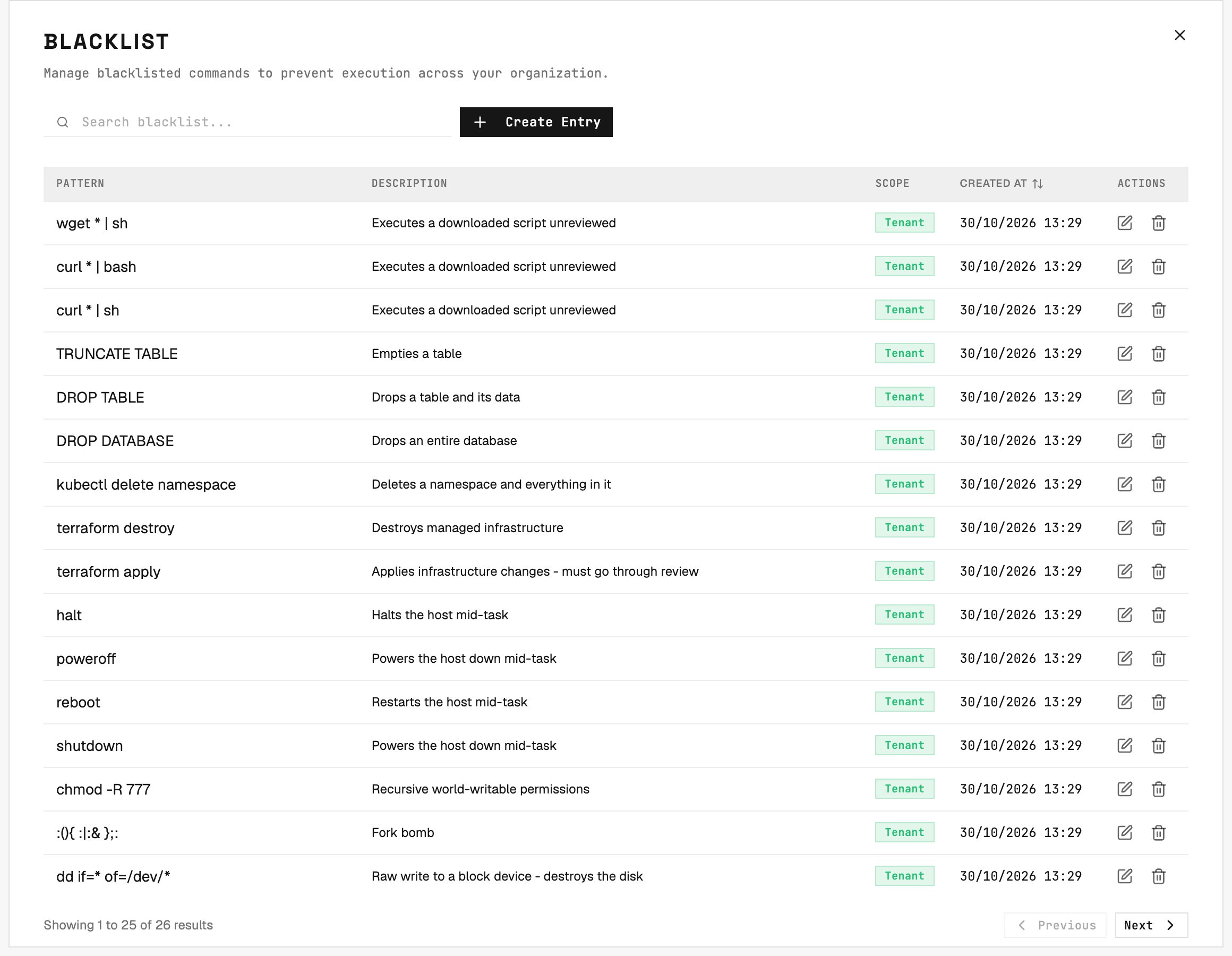
Blacklist: each entry is a pattern (string or glob) plus a description explaining why it's blocked, its scope and when it was created. Click a row to edit or delete the entry.
Pattern
The string or glob pattern that defines which commands to block. Patterns match commands that contain the text anywhere, not just exact matches. Glob wildcards are also supported:*matches any sequence of characters?matches a single character
rm -rf * blocks any rm -rf command regardless of the target path. vim blocks any command containing the word vim.
The Command Center shows a live preview of matching and non-matching commands as you type, so you can verify a pattern before saving it. A collapsible syntax reference is available inline in the create and edit dialogs.
Legacy regular expressions use regex:pattern or regex/flags:pattern, such as regex/i:shutdown. Create and update requests, including /api/v1/blacklists, reject invalid expressions or flags.
Document extraction validates blacklist patterns before replacing earlier extractions. An invalid replacement fails ingestion and leaves the earlier rules in place.
Description
Explains why the command is blocked. Example:Vim is interactive and can't be operated by LLMs
Scope
By default, a blacklist is scoped to your current organization and applies only to that org’s agents. Pick Scoped to Tenant in the Scope selector to make the blacklist available to all organizations in the tenant. Selecting the tenant scope requires tenant-level access; without it the selector stays on Scoped to Organization.Common Use Cases
Destructive Operations Block high-risk commands for additional safety:rm -rf /awscli terminate-instancessudo shutdown
redis-clivim,nano,vimysql,psqlpython